

EPISODE: 01
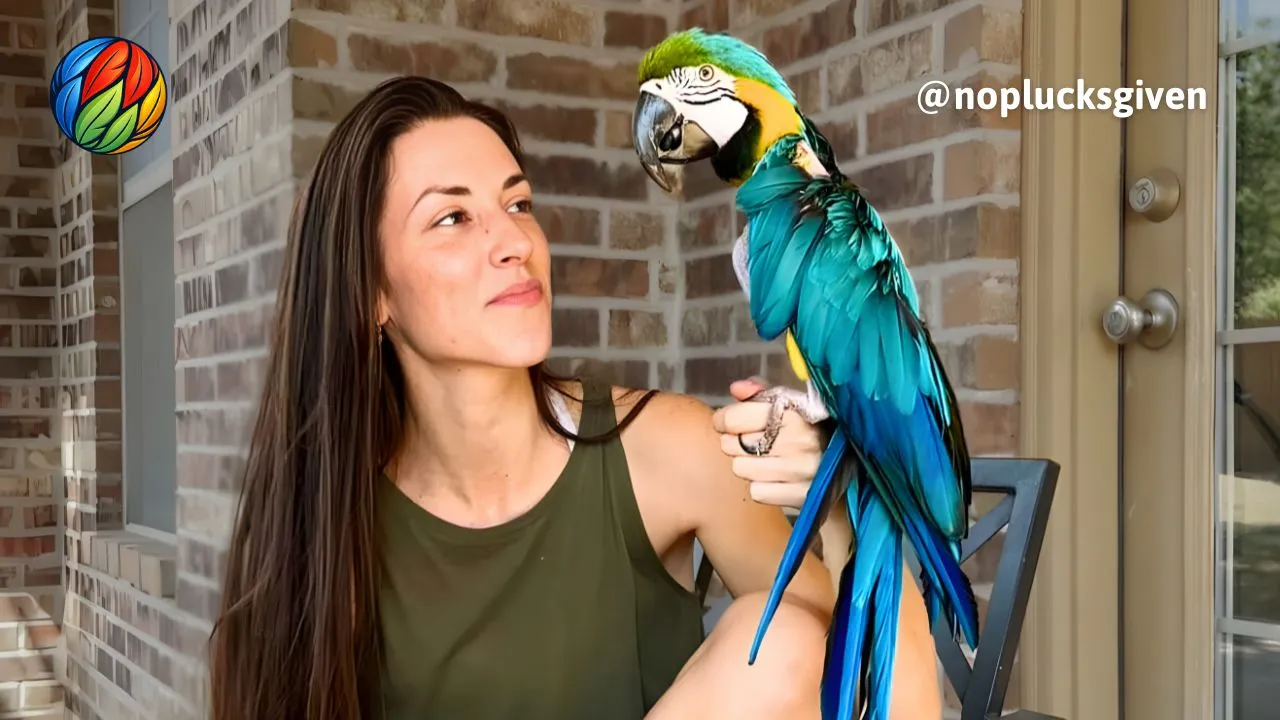
with Kelsey & Louie the Macaw @noplucksgiven
Rescue isn’t just a gift. It’s a commitment you build with patience and education starting today.
Feeling like parrot ownership is all tropical vibes and shoulder-cuddles even though the reality is screaming and bites?
In this episode, Kyle and Emily sit down with Kelsey, creator of “@noplucksgiven” to unpack the gritty, rewarding science of rehabilitating a rescue macaw named Louie, a true example of a macaw rescue story.
You’ll learn:
- The difference between buying a bird (fueling a crisis) and rescuing one (healing a soul).
- Why parrot opportunities are “like wild animals”—they aren’t domesticated, and their behavior requires us to adapt, not the other way around.
- Kelsey’s framework for handling aggression: Invite new experiences, use positive rewards, and take the bad days in stride.
Kyle and Kelsey also break down the realities of lifestyle risk (like why you might not go on vacation for 20 years), why a 5-minute training session is better than a decade in a cage, and practical ways to “be a voice” for the thousands of birds currently overflowing in rescues.
If you’ve been thinking, “I want a bird because they look cute on Instagram,” this episode will shift how you see these intelligent creatures, their trauma, and their future.
Listen on:




You have to know you have a wild animal living in your home… and it’s not always a cuddly thing.
Kelsey, Guardian of Louie the Macaw
TRANSCRIPT
[00:00:07] Kyle: We watched the Louie’s video on Geo Beats, and a lot
of people who are watching this know that we’re the parents of Gizmo
the Grey Bird who also is a rescue. We rescued him at 16 years old. He
was confined to a cage for 16 years of his life, lost the ability to fly.
[00:00:24] Emily: Mm-hmm.
[00:00:24] Kyle: Has no muscle. So when we saw your story, Kelsey,
and Louie’s, it really struck home for us. It felt really close to us.
[00:00:32] Emily: It did.
[00:00:32] Kyle: We wanted to learn more about you and your story. Did
you have parrots prior to Louie?
[00:00:38] Kelsey: No. So I, well, yes, yes and no. I had a budgie parrot,
but it’s definitely not the same as a macaw. Whenever I was growing up,
in second grade, I got a budgie named Jeffrey, and he was my best
friend. Of course, we didn’t know that much about parrot care back then.
I think we’ve come a long way in that space, [00:01:00] but I remember
getting him at the pet store. They clipped his wings immediately. And as
soon as we got home, my mom said, we are never doing that again. So
after his first molt he just flew around the house and I could clap my
hands, he would come to me.
That was my first parrot experience. And then I didn’t have any until, now
in my thirties.
[00:01:21] Kyle: That’s like us. We had zero…
[00:01:23] Emily: no,
[00:01:24] Kyle: Zero parrot experience,
[00:01:25] Emily: Zero parrot experience. It was always a dream. You’d
see them on tv, you’d see them in tropical places where they’d just place
’em on your shoulder. But never in a million years did we think we would
be where we are today with two parrots.
[00:01:40] Kyle: Through that experience we learned so much about
them. We heard your story about rescuing . Tell me a little bit more
about Louie’s
[00:01:48] Kyle: Where did he come from? What’s his background? A
little bit more about that.
[00:01:51] Kelsey: Louie hatched in 1997, which would’ve been the
same year that my budgie, Jeffrey hatched . So I would’ve been in
second grade.
[00:01:58] Kyle: No way. That’s cool.
[00:01:59] Kelsey: His leg [00:02:00] band said he was from Florida. I’m
assuming that’s where his breeder was. Somehow he ended up in
Kansas, and I believe that he was probably in the same home his whole
life. He was owned by a man that kept him and another larger macaw in
the same tiny cage. I do think Louie got out of the cage some, or I just
don’t think he would be as sweet as he is. He’s very handleable.
I do think he got out some, but I don’t think he got out much. Proven by
the fact that he has permanent contracture of his wings.
He just never really could spread them in that cage. So now he
physically has 20% range of motion in his wings. He was with him for 26
years and then that man fell ill. And sent his birds to a parrot rescue organization in Kansas. And that is where Louie’s next adopter got him. [00:03:00] She had him for about 10 months and she fell on some hard times. Ended up homeless. She and Louie were living in her car.
[00:03:08] Kyle: Wow.
[00:03:08] Kelsey: She said this was August in Oklahoma and he is in
her car while she’s pulling double shifts at work.
At that time, I was reaching out to rescues. I had decided, I have the
time to put into a parrot. I want to rescue. And the local rescue was
closed and I was having a hard time finding any. Then I just came
across her Facebook post and there was some pictures of Louie and
she said, he is very, very cuddly.
He’s very, very loud, and I need him adopted now, basically. So I
messaged her and I said, I would like to meet him. And she said, you’re
the first person that’s actually wanted to meet him. Everybody’s just
asking do you think he’d be a good breeder? And she said, I don’t want
him going to that life. So within an hour, maybe two hours of seeing that
Facebook post, I [00:04:00] have driven an hour away from my home to
meet Louie.
He stepped right up for me. I was like, he is coming home with me and
he did. And then I took the next day off work and had to get all of the
supplies and everything. ‘Cause I had no idea I would be bringing home
a bird that day.
[00:04:15] Kyle: With Gizmo, we were not prepared either.
[00:04:16] Emily: Back then, we were uneducated. We just went to the
pet store for our dog and saw a parrot in a cage and we did the thing
that we’re dead against now. We were like, oh, it’s so cute. And we
brought it and there was no education. They didn’t tell us anything about
it, what it needs.
We brought it home and that’s when we researched and we found out
so much goes into owning a parrot. And how many get surrendered and
get stuck on hard times. That’s when we said we have to rescue now.
And we would never, ever advocate for breeding ever again.
[00:04:51] Kyle: And Louis’s story, that was already two homes. You’re
the third of what, you know. We found is that most parrots have an
average of sometimes [00:05:00] 10 households in their lifetime. And
that’s so much emotional trauma and it’s because of lack of education.
One thing that we wanna do more of this year is more education. ‘Cause
you show a lot of the behind the scenes of your real life with Louie. We
really value that and take our hat off to you for that because that’s, it’s
important.
[00:05:16] Emily: It’s so important.
[00:05:17] Kyle: And you’re doing a phenomenal job with him. Did you
see any changes with Louie’s personality as he lived with you and
started feeling more comfortable?
[00:05:26] Kelsey: Yeah, whenever he first came he warmed up to me
so fast. I know this now that I am fostering a second macaw.
Louie was probably two or three days in, he’s letting me pet him. That’s
not the same with my second macaw. Now I’m three months in and he
just let me pet him today, which is exciting.
Oh, congrats.
rarely let you pet them. But, three days in, he is letting me pet him. He’s
exploring the house.
He is not scared of anything. He was very friendly in the beginning going
to everyone. Then he started bonding to me in [00:06:00] particular. I did
all my research ahead of time. I really like, Bird Tricks, YouTube
channel. I had watched probably a hundred hours of training videos
before I got Louie. I was prepared in that way. I knew what I was getting
into as far as that goes.
[00:06:15] Kyle: That’s good.
[00:06:16] Kelsey: I had done all of the research on hormones
preventing any sort of hormonal behavior. Not petting inappropriately.
But still, Louis sees me every day and only me most days.
I was his person pretty quickly. And once I became his person, then he
started to be aggressive towards other people. And that’s when I was
like, Nope, this has to be a trained trick to interact with other people. I
was inviting people over to my house that had never been to my house
before.
I’m like, come over and give my bird a treat. I just want all of these good
experiences with other humans. Our bond is still strong, but he sees
other people as a positive reward now. Still my boyfriend Alec, has to
win him over almost every single weekend that he [00:07:00] comes.
It’s gotten a lot better. He was very aggressive towards Alec, just
because that’s who he saw as a threat.
Now it’s gotten much better. It’s been a little bit of a roller coaster. But
used to, whenever he would be aggressive or, chase me out of a room
or try and bite. I felt broken. I thought i’ve broken this bird, I’ve ruined
him. Now I realize birds just do that. They go through phases. They
might for a whole week, be aggressive or a whole month.
[00:07:45] Emily: Yeah.
[00:07:45] Kelsey: It’s just part of it. And you have to know you have a
wild animal living in your home.
[00:07:49] Emily: Yeah, exactly.
[00:07:51] Kelsey: Exactly.
And it’s not always like a cuddly thing. You didn’t ruin it. You still have to
be careful, but it is what it is. Now I take it a little bit more in [00:08:00]
stride when things go wrong.
[00:08:01] Emily: I think that’s where people start becoming scared of
the bird when it becomes aggressive through hormones. That’s when
they’re like I don’t want this anymore. Then they surrender it and that’s
the problem. If there was more education on this, then I think a lot of
people would be like, okay, this is not forever. Gizmo goes through the
same thing. And he used to be so aggressive with Kyle. Before I had to
reign myself back and let him feed him and be that positive
reinforcement for him, that he accepted him too.
But that took a long time.
[00:08:33] Kyle: It did. Once he bonded with Emily, they do feel that,
relationship status in a sense.
[00:08:39] Emily: Yeah.
[00:08:40] Kyle: Even our vet recently, we were talking about hormones
and stuff and she said, make sure you always do cuddles in front of him
to let the bird know, Hey, we’re friends.
You’re not my mate. Which I thought was a very interesting behavioral
thing, but they have so many characteristics to them. There’s just so
much to them. They’re very smart, emotional and wild is really the key
critical thing. They’re not [00:09:00] domesticated.
[00:09:00] Emily: No.
[00:09:00] Kyle: They are wild animals and we can’t break that behavior.
We have to learn to adapt to their behavior. And I think that’s different
from other animals and people need to research that prior going in.
Come springtime around where we live, and I’m sure it’s common
everywhere else, but marketplaces, just filled with found bird.
Found bird. Found bird. Unclaimed owners because of the fact that
they’re just like, I can’t handle you, goodbye. And they assume, they’re a
bird. They can survive. No, they were born in captivity. They don’t have
that training of being a wild animal, even though they are, it’s still a
learned trait. Other people need to learn those things
[00:09:34] Emily: For sure.
[00:09:35] Kelsey: People becoming scared of them and keeping them
in their cage. It’s such a common story. Half the birds at the rescue
where I volunteer, that’s their story.
Mr. Macawley is my foster right now. He is 27 and he spent about the
last decade in his cage because the bites started getting bad. Somehow
they were probably positively reinforced in some way. Even screaming
can sometimes be positive [00:10:00] reinforcement. It’s exciting. He
ended up in his cage for 10 years and watching cartoons.
What I try to advocate for is, yes, that can happen. Hopefully it doesn’t.
Hopefully you can work through it. Do your research. Keep your
relationship with your bird. It is scary when you get bitten. I have
experienced it and it does make you think twice about picking them up
next time.
If you are scared and you know that you can’t do it. Do rehome them. Do
find them a better place to live because a life in a cage where they can’t
get out for a decade is not worth living. When somebody else might have
the knowledge and experience to do better.
[00:10:38] Emily: A hundred percent.
[00:10:38] Kyle: Really good advice.
[00:10:40] Kyle: It’s so true. For people listening to this, this is
something we did. We actually hired a trainer.
[00:10:45] Emily: Mm-hmm.
[00:10:45] Kyle: And there’s some phenomenal ones the lady we have is
Robin at Parrot SOS, she does online training. She taught me.
It’s about, the relationship you have with the parrot. You have to learn
what motivates them and have that relationship with them to make it
more of a [00:11:00] mutual game versus oh, I need you to step up. That
parrots like. I don’t want to.
You have to make it, what do they want in return and make it fun
exchange. That’s what happened with Gizmo is I wasn’t giving him that
mutual exchange. I wanted to pick him up and he didn’t want me to pick
him up. Until she taught me about, go on a adventure with him, but make
sure it’s motivated with something.
Go on a treat run together, and now he steps up for me every single time
without question. Because when I take him, we go on a little adventure
to go find some fun treats together. Now he feels comfortable, and I
think some people might be a little bit nervous to find help or they feel
embarrassed like this animal’s controlling me. Reach out to some
people. There’s people in our communities that are willing to help.
[00:11:40] Emily: And you can do it all online as well. We thought that
she would have to come to our home and, work with Gizmo.
[00:11:47] Kyle: No.
[00:11:47] Emily: But no.
[00:11:48] Kyle: If the training doesn’t work, like your advice, do that
parrot a justice and give them a chance to have life outside the cage.
‘Cause that’s not fun at all.
[00:11:56] Emily: No.
[00:11:56] Kyle: Rescuing Louie, has something changed in you as a
[00:12:00] person?
[00:12:00] Kelsey: I’ve always said my dogs are my babies, they are my
children. I love them so much and I’ll do anything for them. But then
Louie is my best friend. His intelligence level is a little bit higher than my
dogs. So we just have a little bit different of a relationship.
I am more tied down now. I want to be home. I have to give him all of my
time. I was already giving my time and energy towards my dogs, but it
has made me even more selfless now. These highly intelligent beings
are in my home waiting for me to come home.
They want to see me and I have to give that to them. I think it’s made me
less selfish.
[00:12:42] Kyle: That’s a common thing with parrots. People who are
looking to get birds. You have to think about your lifestyle as well. Yeah.
That’s number one, the people that we got Gizmo from, they said that
they didn’t go on vacation for 20 years. Because they had 17 birds it
wasn’t easy for somebody to come in and care for them.
[00:12:57] Emily: Nope. Mm-hmm.
[00:12:58] Kyle: To find somebody to care for them. They [00:13:00]
basically were homebound for 20 years of their life. That’s a big
commitment if that’s something you’re choosing to do. A macaw, not
everybody would be willing to watch your bird for you.
Right? That’s something that’s challenging.
[00:13:13] Kelsey: It’s been a challenge. A lot of people want to interact
with Louie. They’ve seen him online. And I’ll ask, my friend’s, college age
daughters. They’ll pet sit, and they’ll see him, and they’re like, oh, he is
so cute.
Yes, I want to. I’m like, okay, well you have to come over for training.
First, we’re gonna discuss. And Louie’s easy to handle. Compared to
many other birds. There’s this whole training experience and it’s been
good. I have two pet sitters that I try and rotate back and forth so they
can stay, on top of their knowledge on how to handle Louie and how to
take care of him.
But now that I have Mr. Macawley, who is much less handleable, that’s a
whole new thing to navigate. And he can be scary. I have to tell them ,
this is not Louie. Even though you’re giving Louie this much respect, Mr.
Macawley deserves this much respect if you wanna keep your [00:14:00]
fingers.
I just don’t have them handle him. Which makes me sad ’cause I’m like,
okay, now he’s stuck in his cage for however long I’m gonna go on
vacation. That’s a guilt trip. In the end, I think it’s better for everyone if
everyone stays safe,
[00:14:13] Emily: If you went on vacation, would you have someone
come to your home, rather than.
Yeah, I’m the same.
[00:14:21] Kelsey: There’s really not anywhere I could take them. I don’t
know if my rescue would even board, but if they did, I just feel like I
would be exposing them to potential diseases that they haven’t been
exposed to. Even though they came from a rescue.
[00:14:33] Emily: My fear is if I was to drop Gizmo off somewhere to
board, even if it was another family that knows birds. I wouldn’t feel
comfortable thinking, oh, they’ve just left me. Now I’m on my own again.
That’s what worries me more than anything.
We have been away, not for long, probably five days max.
[00:14:54] Kyle: Mm-hmm.
[00:14:54] Emily: He always knows we come home. We have adult
children that can care for him and he knows, [00:15:00] but I would love
a family vacation where we could all go together. But that’s…
[00:15:04] Kyle: The reality of
[00:15:05] Emily: That’s the reality. It sometimes doesn’t happen.
[00:15:08] Kelsey: People don’t think about it.
[00:15:10] Kyle: I’d love to ask about your social media experience,
because when you got Louie were you sharing some clips with him and
being like, he’s so sweet.
I just wanna share this casually.
[00:15:20] Kelsey: Yes. Now that I’ve shared him so much I get a lot of
comments that are like, Hey, I’m in a really dark place and Louie brings
me joy. Every day I know that I’m going to get a Louie video and that’s
gonna be my smile of the day.
It’s just crazy to me. Honestly, it feels like a crime not to share Louie. He
brings me so much joy and I think he’s adorable. I was sharing him on
my personal, Instagram account and all my friends are like, oh my gosh,
he’s so cute. He’s so cute.
Then, I put together his whole story, very roughly put together. And that’s
when Geo Beats reached out. And then once they did their video and it
had a massive response, I was like, okay, he needs his own page
because I’m getting a lot of [00:16:00] weird people following my
personal page.
[00:16:02] Emily: Yeah.
[00:16:03] Kelsey: So that’s how that came about.
[00:16:06] Kyle: We know that feeling.
[00:16:08] Emily: Yep.
[00:16:08] Kyle: We know that feeling too. I wanna touch base on that
comment about people saying they were in a dark place. Somebody
asked us recently , do you carry on because you feel pressure from
people saying, post, post, post.
And I said, no. If somebody tells me to do something, I do what I want.
But it’s the comments like you mentioned about people saying, i’m in a
mental health crisis and I didn’t know if I could get out of it, but yet just
watching Gizmo’s content today gave me enough to get out of bed or get
out of the house.
That was so powerful to us. If we’re creating content for that, that was
enough for us to carry on. We didn’t realize the impact until the
comments started coming in and I’m glad you’re seeing the exact same
experience.
[00:16:51] Kelsey: It was pretty surprising to me. We get all the negative
comments, all of the weird comments and so those that reach out
[00:17:00] with that, it’s really special and I really appreciate it. It makes
the negative comments go away. Of course, I still worry. I’ve gotten this
comment a lot and I’ve had my own thought about it.
Oh, you’re just posting this cute bird. You’re making people want to go
buy these cute birds. And that’s why I try and do my due diligence. They
shouldn’t be pets. Please rescue. This is how hard it is. I got bitten
today. I try and show all the bad stuff, that bad stuff never goes viral.
It’s always the cute stuff. There is a little bit of an inner struggle for me
with that.
[00:17:31] Emily: We spoke about it being a double-ended sword
because you wanna share all the cute, fun moments. But we get
comments too, saying, oh, I brought a bird because of Gizmo, and I’m
just like, oh, you know. Don’t do that.
[00:17:45] Kyle: Yeah. We’ve seen in recent articles about parrots on a
mass scale being taken from their homes in the wild. The endangered
lists are going higher and higher with these poor parrots. It’s such a
struggle because we wanna share this sweet bond [00:18:00] that we
have. He brings so much joy yet the sheer thought of now we’re creating
a rise of this is such a cool pet to have. That’s why this year start doing a
lot more educational content about the realities of parrots and also
rescuing parrots.
The rescue centers here are constantly overrun. They run out of funding
all the time and they’re making due with what they can because there’s
so many that need homes. The ones that are in captivity, we cannot
release them to the wild. So they do need homes. We really have to just
stop the people that are breeding, making money. We wanna educate
people, that’s not the right move. Please help rescue and adopt.
[00:18:40] Kelsey: I actually just did it a couple of days ago, I tried it out,
Doing a little spotlight on one of the birds at the rescues where I
volunteer. The rescue where I volunteer, it’s been closed since COVID.
They’ve moved and then it’s been a whole thing with the city trying to get
their new building commercially approved.
They’re full to the brim and they still take birds [00:19:00] on. They’re so
close to getting their final inspection in February. I’m going to start
highlighting a few birds and maybe trying to raise some money. We
raised a little bit of money for this last bird that’s injured But
Hey, here’s this cute bird, but you could actually have this one. Don’t go
buy one. There’s so many. The lady at the rescue where I volunteer says
that her strongest bonds have all been with rescues versus babies.
She’s been dumped with babies that she’s had to hand feed that she
didn’t buy them. Somebody just had no idea what they were getting into.
There’s nothing like a rescue bird versus raising one from a baby.
[00:19:37] Kyle: When you get respect from a bird that has already had
some experience and they respect you enough to become family. To me
that’s just such an honor.
[00:19:45] Emily: It is an honor.
[00:19:46] Kyle: It’s and people assume, oh, this baby will bond to me
more. We have a baby. She has her moments where she’s like, Nope,
you’re not my friend today and I’m gonna attack you.
[00:19:57] Emily: Yeah,
[00:19:57] Kyle: Me and her are so close and there’s some days that
she just attacks [00:20:00] me for no reason and these birds are flock
members and once they become part of your flock, you can earn their
respect. And they live forever. Louis’s 26, you said now?
[00:20:09] Kelsey: 28 now.
[00:20:10] Kyle: 28. Wow. People sometimes will assume, they’re 28, I
won’t get a lot of time with them. He’ll probably still outlive you.
[00:20:18] Kelsey: I tell people I have commitment issues, and I wanted
an old bird, but that’s still such a commitment. I still might be looking at
30 years, it gives me anxiety to think that my birds might outlive me.
That’s why with Mr. Macawley, give me one of the older birds in case I
get super attached and I need to keep him. I don’t want to have a 2-year-
old bird that might live until he’s 80.
[00:20:40] Emily: It’s really difficult. We fostered and, rehabilitated, and
re-homed. Found some great homes for three other birds.
You do get attached. What we’ve decided is that, parrots need a lot of
time and attention, and we can’t become bird hoarders. I’d love to have
every single parrot breed. Um, well rescue every [00:21:00] single parrot
breed, but it doesn’t fit into our lifestyle. Gizmo actually doesn’t like other
birds, he thinks is human. It is so rewarding to rescue and I love that you
are doing that.
[00:21:10] Kelsey: I’m fostering. It could potentially be a foster to adopt
situation, but I only want to do something that’s going to enrich Louie’s
life. I don’t want his quality of life to go down if I get another bird and I’m
just feeling it out, seeing how it goes.
I do feel like some birds really need another bird. I don’t think Louie is
one of those. I think she’s happy enough with me.
Even though he might not, be perch mates with another bird, I do think
that there is value in having another bird in the room. When nobody else
is home, even if they’re not best friends, that they find comfort in that.
We’re just testing out to see how it goes. They had their second
interaction today and Louie bit, Mr. Macawley’s tail, so not sure how it’s
gonna go. I was told that is normal and that macaws are like the jocks in
the hallway in high school, so, we’ll see.
[00:21:59] Emily: No, [00:22:00] it is. We got an Indian ring neck and we
absolutely loved him.
We was going to adopt him and keep him. But the fights were ridiculous.
Not between Gizmo and him, but between our Jenday Conure. She
absolutely hated him and
[00:22:15] Kyle: She hated him.
[00:22:15] Emily: We tried everything because we were so in love with
him, and he came from a really bad background too. He was just a
breeders bird so he just had to breed, breed, breed, breed breed. For
seven years solid. We wanted to take that away. And he was with us for
a good few months until he was ready. ’cause he was caged too. We
found him the perfect home. And then you realized, okay, this is so
rewarding.
Not every bird will fit into your life, yours and Louie’s lifestyle. But there
will be one that does, and you can keep rescuing helping find another
home because the right fit.
[00:22:51] Kelsey: Thank you for giving me some hope.
[00:22:53] Kyle: You’re doing amazing.
[00:22:54] Kelsey: Thank you.
This episode highlights the inspiring journey of Louie, a macaw rescue that underscores the importance of understanding the responsibilities of owning such an intelligent creature.
[00:22:55] Kyle: What are some of the negative comments that you’ve
seen?
[00:22:59] Kelsey: There’s always comments [00:23:00] on how I’m
dressed or what I’m doing, but as far as Louie. You know, everyone
wants to know why he’s naked and oh my gosh, you got another bird
and your one bird is already plucked. You obviously don’t know what
you’re doing. He deserves to be a bird. Why are you making him do
these circus tricks? And my response, if I even respond is normally one,
I am not making him do these tricks. He is begging me to do these tricks,
but being a bird does not mean just sitting on a perch in my living room
all day long.
Being a bird means using your brain, working for food. There are studies
that show animals in general enjoy working for their food more than just
it being handed to them. It’s exciting. It’s a shot of dopamine.
I’m trying to keep his brain active. On the flip side of that, other people
have been
wow, you really inspired me to start training my bird. He just sits there
and I didn’t know that they [00:24:00] were capable of doing these
things. It’s inspired some other people to start stimulating their bird in
that way. It’s always, they belong in the wild and Yes they do. I agree.
[00:24:09] Kyle: Agree.
[00:24:10] Kelsey: I’m not gonna fight with you on that.
[00:24:13] Kyle: I think social media is a powerful tool for using it to
bond with your parrot because making content, you go above and
beyond to create fun environments, do interesting things. So I think
there’s a lot of positivity in that. The reason why I bring it up is ’cause
some people might wanna be making content with their parrot, but you
have to be aware you’re going to get hate.
And to not take it seriously. We get some all the time. We’ve had people
say, oh, I wanna come shoot Gizmo, I wanna kill him. The comparing
Birds is very common, so-and-so’s a better bird. Your bird sucks. I’m like,
what?
[00:24:42] Emily: Like, really?
[00:24:44] Kelsey: Roasting and eating Louie, which I feel like some of
them are like lighthearted because he does look like a rotisserie chicken,
but some of them I don’t think are very nice.
His beak gets a lot of comments, which his beak is [00:25:00] not well
maintained because he came to me with a very overgrown beak. It’s
scissored.
It was over going to the point where now the vets can’t just take it all off.
They can only trim it so short and then it has to stay long. Everybody’s
an expert on beak care and your bird beak trim. I’ve taken him to three
different vets and they’ll not make it any shorter.
[00:25:24] Kyle: I didn’t realize that we had an expert level vet in here.
Can you send your number? I’d love to call it, you know, like just things
like that because people are always an expert online.
I’m sure if we were in a room together, they wouldn’t even come and
speak to us.
[00:25:37] Kelsey: The flip side to that is, there’s an exotic vet that has
gotten a pretty big following and her and I follow each other and she was
Hey, there might be a surgery I could do to make Louis be able to
spread his wings again.
There’s not a ton of hope to it. But she was like, I’m gonna do some
research and see what the success rate of that is. And without social
media, I [00:26:00] would never have come into contact with somebody.
I’ve taken ’em to three different vets and nobody’s ever said anything like
that. There are definitely upsides to social media too.
[00:26:08] Kyle: Hundred percent. We’re big advocates on social media.
For one, the community that we have, we’ve made some lifelong friends
through it. Sharing stories that you can’t get from your local areas of
people that have experienced things.
‘Cause parrots are so vast and different, they’re not all the same. So
being able to share a story and finding somebody maybe across the
world that had that exact same experience and share their knowledge
and the vets, reaching out and saying, Hey, there’s some research that
I’m doing that maybe your vets in your area have never thought about.
There’s so many more positives and, we just have to handle the
negative stuff and figure out how to create a better online experience for
’em.
[00:26:43] Emily: Yeah. And you just don’t take things to heart. ‘Cause
the moment you do that, they’ve won.
I used to take a lot of things to heart. What do you think would be the
future on social media with you and Louie and maybe Mr. Macawley?
[00:26:57] Kelsey: Mr. Macawley? That’s [00:27:00] a good question. I
thought about that because. I’m coming up on the year mark of having
posted once daily, every day. Wow. Which is absurd to me.
Whenever I first made his page, I never thought that I would have
enough content to post daily. It does bring me some anxiety now that
I’ve had this streak. I don’t wanna break it. I don’t really know where it
goes. I have told myself, as long as I have stuff to share, I’ll share it.
I’m sure I’m going to slow down at some point. You also get to a point
where you’re like, oh, I feel like I’ve already shared this enough. Who
else would want to see Louie doing the same game? Which apparently a
lot of people still wanna see Louie doing the same game.
I have always said that my retirement plan is I would want to own a bird
rescue. That’s how I decided to get Louie is okay, I’m not retired and I
don’t have enough for that many birds, but I could take on one. And here
I am with two. I’ve spending enough time in rescue now I’m like, I don’t
think I can do that.
My anger with people it really can sour you to the world. How [00:28:00]
horrible people can be. So I don’t know if that would be great for my
mental health. Being able to use Louie’s page as an advocate for rescue
and being able to highlight different rescue stories, I think that’s
ultimately where I see it going.
[00:28:15] Kyle: I love that.
[00:28:15] Emily: That’s amazing. And that’s exactly the same direction
we’re going. You have the privilege of having a big platform and then
you can go either way. We’ve chose to do good with the platform we
have now.
[00:28:28] Kyle: I think you’ll figure it out. You can have an end game
goal, but you just have to live day by day. Making content every day hats
off. ’cause it is not easy.
[00:28:36] Emily: We have not done that.
[00:28:37] Kyle: People who, people who look at content creators or
parrot owners who are posting content they think from an outside
perspective, oh, what an easy thing to do. You have such an easy life. It
is one of the hardest jobs on the entire planet. You are the editor. You
are the director, and also we’re dealing with something that we can’t
control.
We’re filming content today, be on your best [00:29:00] behavior. It’s a
challenging job. It’s definitely rewarding and exciting. I’m really grateful
for your content and we really enjoy watching it ourselves. We’re grateful
that Louie now has a forever home. And hopefully through all of our
content, we can inspire people to do their research and limit the rescues
that are going in and hopefully be able to inspire rescues coming out.
We have our Squawk Shop store, which we sent Louie some gifts, our
Squawk Shop mission statement is we hope to be out of business
forever.
We hope that one day we never have to make toys for parrots. And the
manufacturers out there are like, I’m not giving you toys now ’cause
you’re trying to end my business. But that’s our statement we hope one
day to enjoy them from afar where they belong.
Unfortunately the world is cruel and it’s gonna probably continue. We at
least advocate to just please rescue. There’s thousands of birds out
there that need homes just like Louie and Gizmo and Mr. Macawley.
Continue advocating for that.
[00:29:54] Kyle: And then to end this, we put together some rapid fire
questions, Nothing crazy. [00:30:00] Because Louie’s a Macaw. When is
he the most loud?
[00:30:03] Kelsey: He is the most loud whenever I get home. He
whistles really loud and screams when he sees my Jeep pull in the
driveway.
[00:30:11] Emily: His favorite treat?
[00:30:12] Kelsey: Pistachio
[00:30:14] Kyle: Very cool. Favorite type of toy? Like shredding,
chewing bells,
[00:30:20] Kelsey: soft woods.
[00:30:22] Emily: Does he like his bath, yes or no?
[00:30:26] Kelsey: Yes. But it takes at least four to 10 minutes to get in
the mood.
He likes using all of the hot water before he actually gets in.
[00:30:37] Kyle: Is he more cuddly or more independent?
[00:30:40] Kelsey: Cuddly.
[00:30:41] Emily: Is there something that he hates?
[00:30:44] Kelsey: Vacuum cleaner.
[00:30:46] Emily: Gizmo loves it.
[00:30:47] Kyle: He wants me to vacuum his beak,
[00:30:51] Emily: but then we had this little toy. Well, it’s not a toy, it’s
just a little black object.
Absolutely petrified of it.
[00:30:57] Kyle: Growl scared. I’m like, really, but the [00:31:00] vacuum
when in the vacuum on, yeah.
[00:31:02] Kelsey: Does it make him want to take a bath? I’ve heard that
vacuum. Yes. He does take. Okay.
[00:31:06] Kyle: Yeah,
[00:31:06] Kelsey: Louie it just, he sees red and just tries to attack it
[00:31:12] Kyle: I could just suck his beak up with the hose.
He’s so weird. Most common mood like chaos, sweet, dramatic?
[00:31:22] Kelsey: Probably chaos. He runs around on the floor, on the
table. I say, he looks like a little old drunk man. He is always running,
never in a straight line. It’s just like, where can I find the nearest treat?
Or begging for a treat in some way.
Very food motivated.
[00:31:38] Emily: What is his most iconic or your favorite sound he
makes?
[00:31:43] Kelsey: He just started saying, I love you a little bit more,
consistently.
[00:32:00] That gets to me. I really like it whenever we are sitting
together and he does his little beak chatters and it’s sounds like kisses.
So he goes up to me and does that, and then sometimes he’ll come up
and he’ll blow out of his nose and go. It’s just a very cute little noise. But
he is doing it intentionally at me, and I think that’s adorable.
[00:32:28] Kyle: I love that.
[00:32:29] Emily: We haven’t done it for a while, but we have an online
flock where, gizmo will go live with other birds. They can hear each other
and they’ve all begun to know each other. They know their owner’s
voices. There a day, one day we can organize you to come in. Yeah. But
it’s so much fun fun. It’s really fun.
[00:32:48] Kelsey: Would realize it or not, but I, it would be interesting to
see his reaction to that.
[00:32:53] Emily: Sometimes we face the camera to Gizmo, but most of
the time, he can’t see them, but he hears them and [00:33:00] Gizmo
knows when we’re live, and he knows when we’re recording. I don’t
know how he knows that. It’s been amazing. And then they’ve all picked
up each other’s staple things.
[00:33:10] Kelsey: Are they all grey’s?
[00:33:10] Emily: Not, he’s not the best influence, I would say.
[00:33:13] Kyle: They’re not all grey’s?
[00:33:14] Emily: No, not all grey’s. Not all grey’s. We’ve had some
macaws.
[00:33:19] Kyle: We have had some macaws. Yep. Join us. We’ve had
all kinds of…
[00:33:22] Emily: every single parrot. We just got so busy, but we used
to do it nearly every night.
People looked forward to it and we had so many boxes with all these
different birds and then Gizmo would get annoyed. So we had to scale it
down just to his friends. Because he is just like, uh uh.
[00:33:39] Kyle: It’s very interesting, seeing how they react online.
[00:33:42] Kyle: What is something that you would wanna leave
somebody listening to this today?
[00:33:45] Kelsey: I think we’ve probably beat this like a dead horse, but
birds are such difficult pets to have. Even the happiest bird in captivity, I
don’t believe is as happy as a bird that has [00:34:00] never lived in
captivity. Even if your bird has a cage-free life and it free roams around
your house, it shouldn’t be stuck in your house.
If there’s any way we can prevent another bird from having to live this
life, it is not supporting breeders, not supporting pet stores. And if you
really want to live with one of these special little creatures, go volunteer.
Try and form a bond with a bird at a rescue before taking it home. Clean
cages, do all of the things that you would have to do and see if you think
you could actually deal with that bird.
That can be as loud as a police siren in your living room.
[00:34:47] Emily: No, that’s amazing.
I just love that we are completely on the same page. On everything.
Even the start of our story and the social media success. Everything is
very [00:35:00] similar and I can resonate with you so much.
[00:35:03] Kelsey: Thank you guys for having me on. It was so good to
meet you.
[00:35:04] Kyle: Thank you for being on. Tell everybody where they can
find you. Obviously we’re gonna drop links and we’re gonna have it on
screen of who you’re, but tell us where we can watch you.
[00:35:13] Kelsey: Louie has a YouTube,
a TikTok and Instagram and now even a Facebook, and he is at no
plucks given. Which the little old ladies at the hospital where I work,
there are some volunteers that save the newspapers and I come and
pick them up to bring them to the rescue. That’s another thing, If you get
newspapers, save them and donate them to your local rescue.
[00:35:37] Kyle: Love that.
[00:35:37] Kelsey: Anyways, they kept asking about Louie and I gave
them my social media and she goes, oh, no plucks given, now what
does that mean? I’ve never had to explain that before.
[00:35:50] Emily: I love it.
[00:35:51] Kyle: When you put that in, were you shocked that was
available because I feel like that’s such a good name.
[00:35:56] Kelsey: Yeah, I tried a lot of different things, like I [00:36:00]
don’t give a pluck, that type of stuff.
And then whenever I finally found that one, I was like, oh my God. And
on all platforms, so. Right? We lucked out on that one.
[00:36:07] Kyle: Thank you, Kelsey, for your time. And give Louie some
scritches from us.
Key Takeaways
- Parrots are Wild, Not Domesticated: Unlike dogs or cats, parrots are wild animals living in a home environment; they go through hormonal phases and aggressive cycles that owners must learn to adapt to rather than trying to “break” the behavior.
- The Long-Term Physical Impact of Neglect: Louie’s 26 years in a small cage resulted in permanent “contracture” of his wings, leaving him with only a 20% range of motion and the inability to ever fully spread them again.
- The Importance of Mutual Training: Successful parrot ownership requires finding what motivates the bird—such as “treat runs” or “adventures”—to turn training into a mutual game rather than a one-sided demand for obedience.
- The Ethical Weight of Social Media: While viral “cute” videos bring joy to millions, creators face a “double-edged sword” of accidentally encouraging people to buy birds they aren’t prepared for, making educational content about the “bad stuff” and rescue advocacy essential.
- Rescue Over Breeding: The rescue system is “full to the brim” because people often underestimate the commitment required; potential owners are urged to volunteer at a rescue first to understand the noise, cleaning, and care involved before ever bringing a bird home
Guest Appearing in this Episode
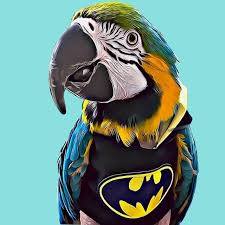
Name: Louie
Species: Blue & Gold Macaw
Age: 26
Rescue: Yes
Resources Mentioned
Join Thousands of Guardians
Simple, data-backed, and straight to the point