

Listen on:




The Parrot Trade and the Demand Behind Talking Birds
What looks cute online can hide a brutal system most parrot lovers never see.
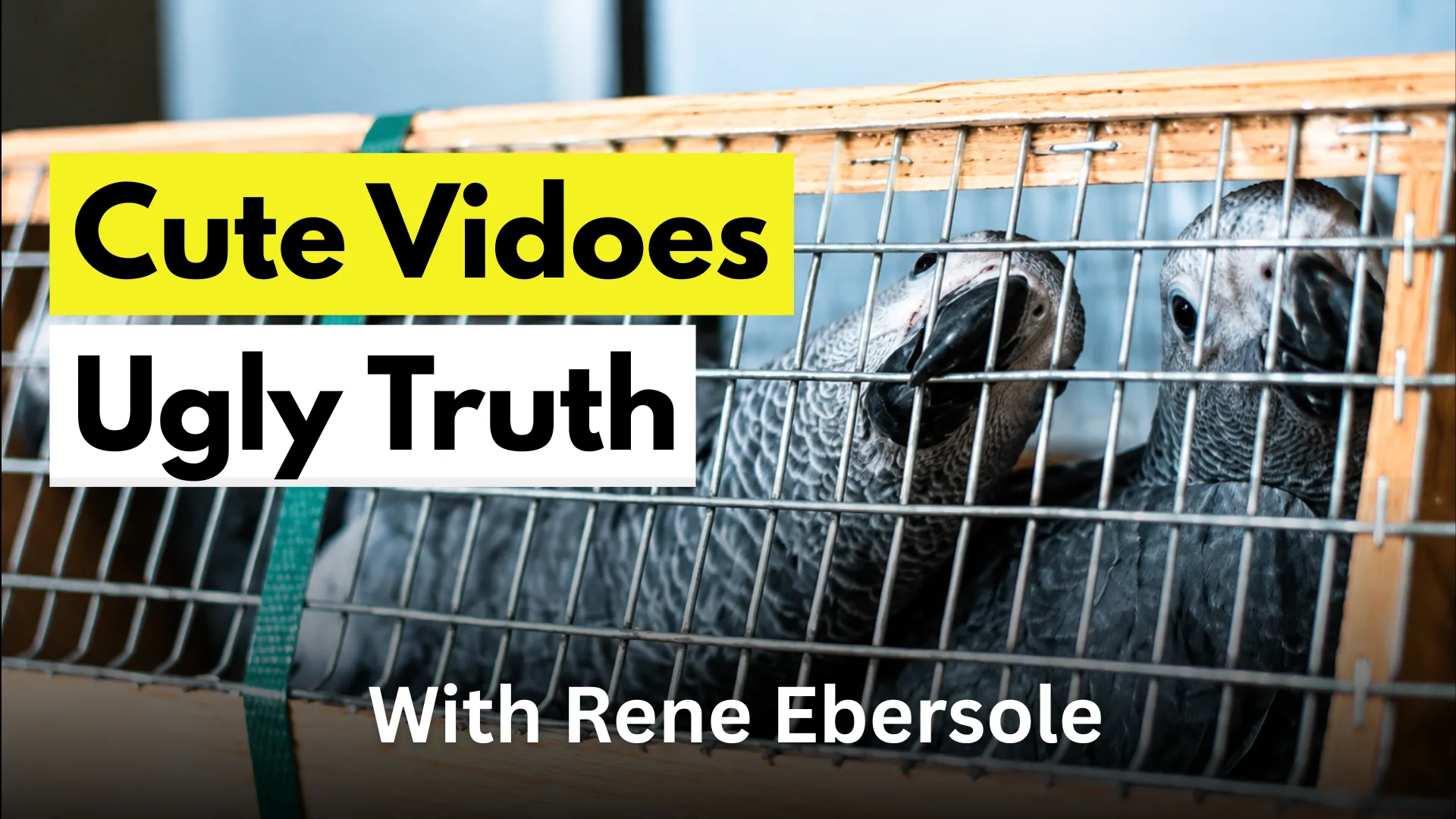
The parrot trade is not just a distant conservation issue. In this episode of Squawk Global, Kyle Kaplanis and Emily Vincent speak with investigative journalist Rene Ebersole about the demand behind talking birds, the realities of wildlife trafficking, and the responsibility that comes with sharing parrots online.
Rene Ebersole is the editor in chief and co-founder of WIRE, Wildlife Investigative Reporters and Editors. Her reporting on African Grey parrots, wildlife crime, and the global exotic pet trade helped spark a major shift in how Squawk Global thinks about its own platform, Gizmo’s story, and the message behind every viral clip.
This conversation connects social media, pet stores, breeding systems, rescue capacity, and wild parrot conservation. It asks a hard question: when a funny parrot video makes someone want a bird, what happens next?
This is not about guilt. It is about seeing the whole picture. Birds already in captivity deserve safety, enrichment, medical care, and lifelong planning. Birds still in the wild deserve the chance to stay there. And the people who love parrots have a chance to change the story before the demand machine gets even louder.
How Social Media Fuels the Parrot Trade
Parrots are brilliant, funny, emotional, and deeply charismatic. That is exactly why they perform so well online. A short video of an African Grey talking, singing, joking, or copying a human voice can make parrot life look effortless. But a 30-second clip can never show the years of care, the mess, the cost, the noise, the vet bills, the hormonal changes, or the emotional complexity behind that moment.
Kyle and Emily speak honestly about the comments they have received from people saying they want a bird because of Gizmo, or that they bought one and now cannot make the bird talk. Rene’s reporting forced them to ask whether adorable parrot content can unintentionally create demand for more birds, especially smart species like African Greys.
What Rene Ebersole Saw While Reporting
Rene describes seeing the parrot trade from multiple angles: commercial breeding facilities, pet markets, wild-caught birds, and the global systems that move animals from forests into cages. Some of the hardest moments came from reporting in the Democratic Republic of Congo, where people climbed high into trees or used glue traps and bait birds to capture wild parrots.
One of the most chilling details was the language used by people in the trade. Rene recalls a seller talking about incoming parrots as “pieces,” as if live, intelligent animals were inventory on a shelf. That language says the quiet part out loud: once an animal becomes a commodity, suffering becomes easier to ignore.
“Smart birds are particularly in demand. And it really is all about the demand. That’s what drives the global wildlife trade.”
Rene Ebersole
Why Adoption Matters for Captive Parrots
This episode does not tell people to abandon the birds already here. Captive parrots cannot simply be released. Many would not survive, especially in climates far from their natural range. Instead, the conversation points toward adoption, rescue, and better lifelong care for birds already living in human homes.
Gizmo’s story is central to that message. He was adopted at 16 and had been considered difficult, aggressive, and possibly unadoptable. In the right home, with patience and respect, he became a powerful advocate for older rescue birds. His life shows that adopting an adult parrot is not “settling.” It can be life-changing.
The Rescue Crisis and Responsible Ownership
Kyle and Emily talk about researching parrot rescues across North America and finding many that are already full or unable to accept new birds. This matters because parrots live for decades. A bird bought on impulse can outlive a person’s job, relationship, housing situation, health, and even the owner themselves.
Responsible parrot ownership means planning beyond the excitement of bringing a bird home. It means understanding diet, enrichment, behavior, veterinary care, noise, destruction, travel limits, and backup caregivers. It also means building a trusted network before there is a crisis. Parrots are not starter pets. They are lifelong, high-commitment beings with flock-level emotional needs.
Changing the Message Without Losing the Joy
One of the most honest parts of this episode is the tension between joy and responsibility. Gizmo’s videos have helped people laugh, feel seen, and even get through dark emotional moments. Rene acknowledges that this joy matters. Animals can connect with people in ways that are hard to explain and impossible to fake.
The challenge is not to erase that joy. The challenge is to pair it with truth. Squawk Global can still celebrate Gizmo while reminding people that parrots are not products, props, or shortcuts to internet attention. They are sentient beings, and they deserve a message bigger than “I want one.”
Key Takeaways
- Demand drives the trade: Smart, talking birds are highly sought after, and that demand can pressure wild populations, breeders, rescues, and vulnerable communities.
- Social media has consequences: Cute parrot videos can bring joy, but they can also make complex animals look easy to own.
- Wild-caught parrots suffer deeply: Rene describes glue traps, bait birds, dangerous climbs, transport deaths, and birds treated as commodities.
- Adoption is a powerful alternative: Many parrots already in captivity need homes, and older birds like Gizmo can thrive with the right people.
- Ownership requires a lifetime plan: Parrots can live for decades, so guardians need backup caregivers, avian vet access, and realistic expectations.
- Awareness can change the story: The goal is not shame. It is honesty, better choices, and a stronger voice for parrots.
Guest Appearing in This Episode

Guest: Rene Ebersole
Organization: WIRE, Wildlife Investigative Reporters and Editors
Bio: Rene Ebersole is the editor in chief and co-founder of WIRE. She is an investigative journalist focused on wildlife crime, environmental crime, and the exploitation of nature, including reporting on the global African Grey parrot trade.
Social links: WIRE
Resources Mentioned
TRANSCRIPT
Join the Squawk Global Community
If this episode hit you in the feathers, you are not alone. Join the Squawk Global community as we keep learning, asking better questions, supporting rescue, and helping parrots get a stronger voice both in homes and in the wild.