

The Parrot Crisis: Building a Safety Net for Companion Birds
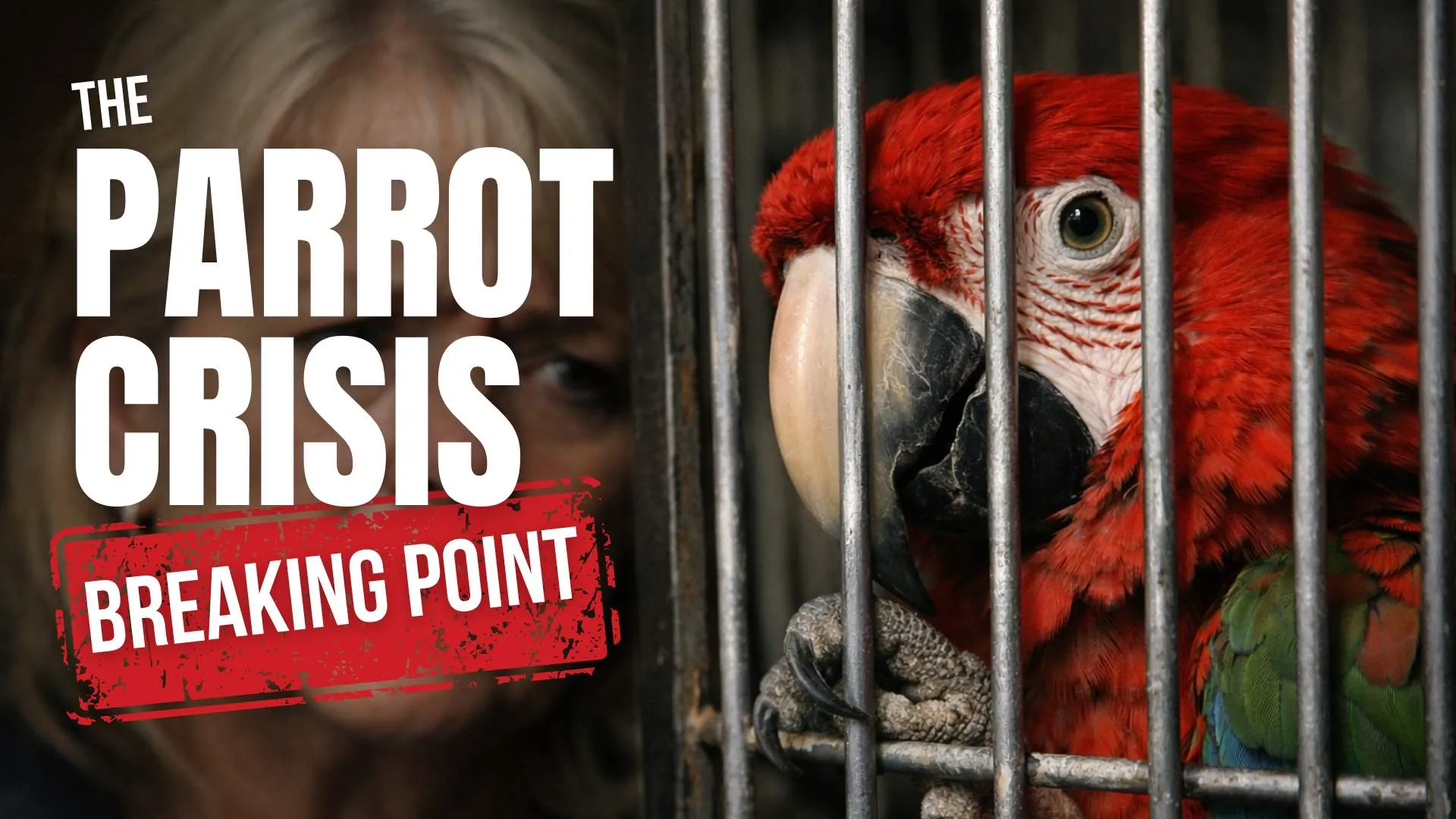
Parrots are being passed through a system that was never built for them, and the cracks are starting to show.
The parrot crisis is not a distant problem. It is already unfolding in homes, rescues, shelters, veterinary clinics, and families across Canada.
In this conversation, Judy Tennant, founder and executive director of Parrot Partners Canada, brings a rare systems-level view to the companion bird world. Before founding Parrot Partners, Judy worked in organizational development, where her role was to look ahead, identify pressure points, and understand how human behavior affects the health of a larger system.
Now, she applies that same lens to parrots, and what she sees is sobering: aging guardians, retiring rescue founders, rising costs, fewer avian veterinarians, climate-related risks, gaps in public education, and a rescue model inherited from dogs and cats that does not fit birds who may live for decades.
This episode is not just about rescue. It is about responsibility. It asks what happens when long-lived, intelligent, wild animals are bred and sold into homes without a strong enough safety net underneath them.
It is a hard conversation, but not a hopeless one. Judy’s message is clear: if the parrot community gets organized, gathers data, builds infrastructure, and supports rescues differently, we can create something better for the birds already here.
Listen on:




Why the Parrot Crisis Is Growing
Judy Tennant describes the current moment as a convergence of pressures. One issue alone would be difficult. Together, they create a fragile environment for parrots, guardians, rescues, and welfare organizations.
Parrots live a long time. That fact is often repeated like trivia, but in practice, it changes everything. A bird may outlive the person who bought them. A bird may move through multiple homes. A bird may need support not for years, but for decades.
When a system is designed around shorter-lived companion animals, parrots can fall through the cracks. Judy explains that dogs and cats have a massive infrastructure around them: humane societies, SPCAs, public familiarity, adoption pathways, and widespread veterinary knowledge. Parrots do not have the same level of support.
That gap matters because parrots are not simple pets. They are complex, sensitive, intelligent, wild animals living in human homes. When their guardians can no longer care for them, the question becomes urgent: where do they go, and who is prepared to receive them?
The Baby Boomer Shift and the Parrot Crisis
One of the biggest pressures Judy identifies is the aging of baby boomer parrot guardians. As people retire, become ill, move into care homes, or pass away, their birds must be moved somewhere else.
Sometimes those birds go to relatives. Sometimes they go to rescues. Sometimes they are sold or passed along privately. But each move creates instability for the bird. And if a relative takes the bird with good intentions but later realizes they cannot manage the care, the bird may move again.
Judy also points to a larger risk: what happens when rescue founders themselves age out, burn out, or can no longer continue? A single private home may involve one or two parrots. A rescue collapse could involve dozens.
Those birds then have to be absorbed by a system that is already under pressure. More birds need placement. More birds need quarantine. More birds need veterinary care. And at the same time, avian veterinarians are also becoming harder to access.
Why Parrots Do Not Fit the Dog and Cat Model
Traditional adoption models often treat placement as a transfer of ownership: the animal leaves the rescue, the adopter becomes the owner, and the rescue moves on to the next urgent case.
Judy argues that this model does not work well enough for parrots. A parrot may live through many human life stages. Divorce, illness, aging parents, children, financial stress, housing changes, and accidents can all affect whether a person can continue caring for a bird.
That does not mean the person failed. It means life happened. But without a safety net, the bird may be passed from home to home, and every move carries emotional, physical, and welfare risks.
Judy uses the phrase “fairy godmother” to describe what parrots need: an ongoing protective presence that knows where the bird is, can help the guardian, and can bring the bird back if needed.
“We need to put that safety net underneath them. That’s on us to put that.”
Judy Tennant
The Education Gap
One reason parrots are so difficult to place well is the size of the education gap. Many people have grown up around dogs and cats. Even if they are new guardians, they usually have some cultural understanding of what those animals need.
Parrots are different. A first-time parrot guardian may quickly discover that their entire home environment has to change. Cooking tools, candles, fumes, household routines, noise, sleep, enrichment, diet, and social needs all matter.
Judy explains that ethical rescues often need to slow people down. That means birds may stay in care longer, which increases costs and pressure on already stretched organizations. But rushing placements can simply move the problem forward.
When a bird is placed too quickly and the home is not prepared, the bird may be rehomed again. Judy calls this “rehoming roulette,” because every transfer spins the wheel on whether the next home will truly be safe and sustainable.
The Parrot Pension Plan Model
One of the most forward-thinking ideas in this conversation is Judy’s proposed “parrot pension plan.” Instead of relying only on donations and crisis fundraising, the model would create a more stable financial structure around each bird.
Under the model Judy describes, Parrot Partners keeps ownership of the bird while the home becomes a guardian or placement. The guardian pays a small monthly fee that helps support the bird’s long-term care, much like paying into insurance or a pension.
The goal is stability. If the bird needs to return later in life, the rescue is not starting from zero. There is already a structure, a relationship, and ideally a fund to help support that bird’s food, veterinary needs, boarding, emergency support, or retirement care.
Judy also explains that this model gives guardians ongoing support. Parrot Partners can provide education, behavior help, emergency guidance, and in some cases medical support because the organization retains ownership of the bird.
This is not a small shift. It challenges the familiar adoption model. But for animals who may live thirty, forty, fifty, or more years, Judy argues that a different model is not just useful; it may be necessary.
How People Can Help
Judy is clear that this work will take more than good intentions. Parrot Partners needs data, planning, financial support, skilled volunteers, professional expertise, and collaboration across the parrot welfare community.
She specifically mentions the need for people with experience in actuarial science, project management, data analysis, lobbying, and long-term systems planning. The vision is not just to help one rescue. It is to build a stronger safety net that can eventually support parrots across Canada and inspire models elsewhere.
For people who cannot offer specialized skills, Judy emphasizes that even small monthly donations, sharing educational videos, starting conversations, and sending encouragement can help keep the work moving.
The heart of this episode is heavy, but it is not helpless. The parrot crisis is real. The system is underbuilt. But the solution starts with people who are willing to look honestly at the problem and build something better before more birds are left with nowhere to go.
Key Takeaways
- Parrots need a different welfare model: Dogs and cats have established support systems, but parrots require long-term planning because of their lifespan, complexity, and sensitivity.
- Aging guardians create a growing pressure point: As older parrot owners retire, become ill, or pass away, more birds may need safe, knowledgeable placement.
- Rescue capacity is fragile: Rising costs, limited avian veterinary access, and increased bird movement can strain rescues and increase risk for the birds.
- Education must come before placement: Ethical parrot rescue often means slowing people down so they understand the real commitment before taking a bird home.
- The “parrot pension plan” offers a safety net: Judy’s model focuses on long-term guardianship, monthly support, retained ownership, and stable care pathways.
- Everyone can play a part: Donations, data skills, project management, lobbying, sharing resources, and community conversations can all help build a stronger future for parrots.
Guest Appearing in This Episode
Guest: Judy Tennant
Organization: Parrot Partners Canada
Bio draft: Judy Tennant is the founder and executive director of Parrot Partners Canada. With a background in organizational development and behavior modification, Judy brings a systems-thinking approach to parrot rescue, welfare, education, and long-term companion bird care.
Social links:
Resources Mentioned
TRANSCRIPT
Kyle Kaplanis: Hi Judy. Welcome to the Squawk Global Experience. We are really excited to have you here today, and we’d love to learn more about you. Tell us who you are and what it is that you do.
Judy Tennant: Thanks for having us. We really appreciate the opportunity to talk about these things because they’re really important. My name is Judy Tennant. I’m the founder and executive director of Parrot Partners Canada.
Before I founded Parrot Partners, I worked in organizational development for corporations. Our job was to anticipate what would make humans less effective, and what would make humans more effective. I bring that behavior modification expertise into the parrot world, but I still have that corporate mindset of scanning the horizon for where the problems are and how they affect the running of a facility.
Because of that background, there are some well-known issues coming down the pipe, and I now look at them through the lens of how they affect our facility, our parrots, and the larger rescue sector. The whole rescue sector is not ready for it.
Kyle Kaplanis: That sounds scary. When you say people aren’t ready for it, does that mean you see a bigger crisis at hand than most people are seeing?
Judy Tennant: Yes. We used to joke that baby boomers retiring out was the slowest crisis in the world. We knew this would happen decades ago, and yet we find ourselves unprepared. From an ownership perspective, when baby boomers die, become elderly, or move into nursing homes, their parrots shift. That bird is either going to shift to a rescue, to a relative, or be sold online. But that bird is going to shift.
If the bird goes to a relative, people may think the bird is safe. But then the relative realizes they cannot do this with children, aging parents, work, and life. Then there is another shift. That creates instability.
The bigger issue is when founders and rescue proprietors check out, because that is a massive shift. They may have ten, fifty, or a hundred birds. Those birds have to be repositioned and absorbed into the system.
When birds are under stress because they are moving, dormant illnesses may surface. That is why quarantine matters. But at the same time, avian veterinarians are retiring, and we are not seeing the next generation replace them at the same level.
There is a shortage of avian veterinarians, and it is getting worse. Now we have birds moving, birds under stress, birds needing avian vets, and the vets are not there.
We are also starting to find hoarding situations as older people become ill or are taken to hospital, and then someone discovers many birds in the home. Animal welfare then asks where the rescues are. You can see the domino effect.
We need stability in any system. Stability is worth its weight in gold, and we are moving into a very unstable environment.
Kyle Kaplanis: We knew there was a crisis, but we did not understand this knock-on effect.
Judy Tennant: It is not just a fun fact that parrots live a long time. There are multiple implications. Dogs, cats, rabbits, and other animals do not experience this in the same way. Even if breeding stopped now, we would still have decades of responsibility for the birds already here.
At the same time, rescues are seeing inflation and rising costs. Pellets, lights, insurance, veterinary care, everything goes up. Avian vet care can be much more expensive than care for a dog or cat.
Parrots are also harder to place. The education gap is much larger than it is with dogs and cats. First-time parrot owners often realize quickly that they do not know what they are doing. There are household changes, safety concerns, cooking changes, and lifestyle changes.
An ethical rescue has to slow people down. But slowing people down means caring for the bird longer, and that costs money. If a rescue gives in to pressure and flips the bird quickly, that bird may be rehomed again.
Rehoming is stressful for birds. It is not unusual to see birds that have had many homes. We are killing them with the stress of the situation.
If rescues are under pressure, they may cut corners. They may not be able to test or quarantine properly. When birds are brought together without proper safeguards, a rescue can become the center of a disease outbreak.
Climate change adds another layer. More severe weather, power outages, flooding, mold, food supply disruptions, and rising insurance costs all affect rescues and bird care. Responsible facilities need planning, generators, redundancies, and infrastructure. That all takes money.
Parrots are getting a raw deal. The infrastructure, money, planning, and processes are mostly built for dogs and cats. Parrots are among the most popular companion animals, they live the longest, and yet our main animal welfare infrastructure has largely turned away from them.
Humane societies and SPCAs often do not have the training, resources, or mandate to care for parrots. So we may need to recreate that type of infrastructure specifically for parrots.
The first step is data. Data drives decisions. We need to know how many parrots there are, what species, what outcomes, how long they live, how many are moving through rescues, and what care they require.
With data, we can go to government agencies, the public, breeders, and funders. We can show the lay of the land and make better decisions.
We also need a different model. Adoption, as a sale or transfer of property, does not work well enough for parrots. They need someone watching over them all the way through. If something happens in the home, the bird should come back to a knowledgeable facility.
That model is expensive. So we are looking at actuarial science, data, and investment models. We call it the parrot pension plan. Each bird has a pot of money so that if the bird comes back, retires, or needs care, there is support.
We are doing a three-year pilot. We are gathering data, educating animal welfare professionals, and working toward major donor support. We have received a grant to help with training, and Greyhaven in British Columbia has agreed to share data and help with training.
We need facilities across Canada so animal welfare professionals can get hands-on experience. You can read a book about swimming and still drown. Hands-on learning matters.
Our model keeps ownership of the bird. The home becomes a placement or guardian and pays a small monthly fee. That fee helps provide stable income and supports the bird’s long-term care.
If the bird gets sick or the guardian needs help, we can provide support because we still own the bird. We can provide behavioral support, emergency guidance, and in some cases nursing support while working to reach a veterinarian.
This is a different model, but if we can prove that it keeps birds in homes longer and prevents them from becoming a burden during hoarding situations or rescue collapses, we can begin rolling it out more widely.
People can help by donating, offering expertise, sharing information, and helping with data, actuarial science, project management, lobbying, and awareness. Even small monthly donations help. Encouragement helps too.
We can do this if everybody does their part. But if people turn away, the parrots experience the results.
Kyle Kaplanis: This conversation is heavy, but it is the truth. These are the real conversations we want to have with Squawk Global: voices for those who cannot speak for themselves.
Judy Tennant: Everybody brings something to the table. It is like a stew. Everybody brings a certain flavor.
Join the Squawk Global Community
If this conversation stayed with you, you are not alone. Squawk Global exists to bring parrot people together around the stories, education, and advocacy these birds deserve. Join our community to keep learning, keep asking better questions, and help give parrots a stronger voice.